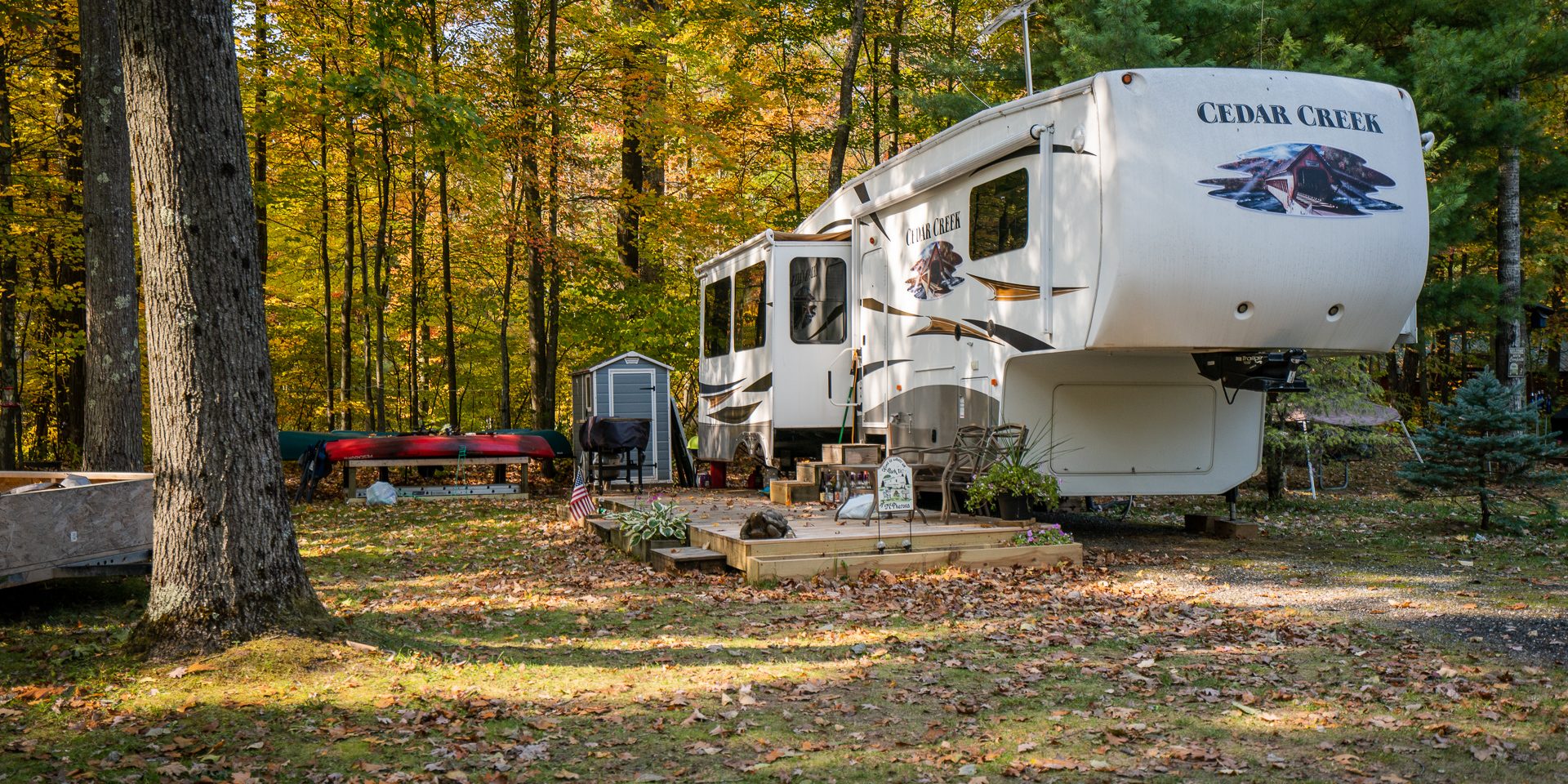
As another camping season comes to a close, it’s time to start thinking about protecting one of your biggest investments—your RV. Proper winterization helps prevent costly repairs, extends the life of your RV’s plumbing and mechanical systems, and makes opening day next spring much easier.
Whether you’ve spent the season exploring West Michigan from White River RV Park & Campground or have just returned from your final trip of the year, taking a few hours now to properly prepare your RV for winter storage can save you significant time and money later.
This simple checklist will help you close out the camping season with confidence—and start looking forward to the next one.
Give Your RV a Thorough Cleaning
Before placing your RV into storage, clean both the interior and exterior. Dirt, food particles, and moisture left behind during the winter can lead to mold, mildew, odors, and unwanted pests.
Your fall cleaning checklist should include:
- Wash and wax the exterior.
- Clean the roof.
- Remove leaves and debris.
- Vacuum carpets and furniture.
- Wipe down countertops and cabinets.
- Clean the refrigerator and freezer.
- Empty all trash containers.
- Remove all food, including canned goods and spices.
A clean RV is much more enjoyable to open next spring.
Drain the Fresh Water System
Water left inside plumbing lines can freeze during a Michigan winter. As water freezes, it expands, which can crack pipes, fittings, faucets, pumps, and water heaters.
Drain:
- Fresh water tank
- Gray water tank
- Black water tank
- Low-point drains
- Water heater
Most RV manufacturers recommend bypassing the water heater before introducing RV antifreeze into the plumbing system.
If you are unsure of the correct procedure for your RV, consult your owner’s manual or visit the RV Industry Association for additional maintenance resources.
Protect the Plumbing with RV Antifreeze
After draining the water system, use only RV/Marine antifreeze. Never use automotive antifreeze in an RV plumbing system.
Run RV antifreeze through:
- Kitchen sink
- Bathroom sink
- Shower
- Outside shower (if equipped)
- Toilet
- P-traps
This helps protect plumbing components throughout the winter months.
Take Care of the Batteries
Cold temperatures can shorten battery life if batteries are neglected during storage.
Before storing your RV:
- Disconnect the batteries.
- Clean battery terminals.
- Fully charge the batteries.
- Store batteries according to the manufacturer’s recommendations.
- Periodically check charge levels throughout the winter.
Well-maintained batteries are much more likely to be ready when camping season returns.
Inspect the Roof and Exterior Seals
Fall is an excellent time to inspect your RV for small issues before they become expensive repairs.
Look carefully at:
- Roof seams
- Windows
- Vents
- Doors
- Slide-outs
- Exterior lighting
Repair cracked sealant before winter weather has an opportunity to force water into the RV.
Protect Your Tires
Your tires will spend several months supporting the weight of your RV while parked.
Before storage:
- Inflate tires to the manufacturer’s recommended pressure.
- Inspect for cracks or unusual wear.
- Cover tires to protect them from UV exposure.
- If practical, move the RV slightly during long-term storage to reduce flat spotting.
Taking a few minutes now may extend tire life and improve safety next season.
Discourage Rodents and Insects
As temperatures cool, small animals often look for warm places to spend the winter. Unfortunately, RVs can become attractive shelter.
Reduce the chance of unwanted visitors by:
- Removing all food.
- Cleaning thoroughly.
- Closing exterior openings.
- Inspecting utility penetrations.
- Checking storage compartments.
Inspect your RV occasionally throughout the winter if possible.
Prepare the Interior for Storage
Small steps now can help prevent musty odors and moisture damage.
Before locking the door:
- Open interior cabinets.
- Prop refrigerator doors open.
- Remove bedding if storing for an extended period.
- Place moisture absorbers inside.
- Close blinds to reduce sun exposure.
A dry interior makes spring cleanup much easier.
Create a Spring Opening Checklist
Before putting your RV away, take a few minutes to make notes about anything you noticed during your final camping trip.
Perhaps a cabinet latch needs adjustment, a light bulb should be replaced, or you would like new camping chairs before next season.
Keeping a simple checklist now prevents forgotten repairs when camping weather returns.
Start Planning Next Year’s Adventures
One of the best parts about winterizing your RV is knowing another camping season is already on the horizon.
As you put your RV into storage, begin thinking about the places you’d like to visit next year. Many campers reserve favorite campsites well before spring arrives, especially for holidays and popular weekends.
If West Michigan is on your list, now is also a great time to begin planning another stay at White River RV Park & Campground. Browse our guide to exploring West Michigan or discover why autumn is one of the most beautiful times to visit.
Frequently Asked Questions
Why should I winterize my RV?
Winterizing protects plumbing, tanks, appliances, seals, batteries, and other components from freezing temperatures and helps prevent costly repairs during the off-season.
When should I winterize my RV in Michigan?
Most Michigan RV owners winterize before the first hard freeze, typically during late September, October, or early November depending on local weather conditions.
Can I use automotive antifreeze in my RV?
No. Always use RV/Marine antifreeze designed specifically for RV plumbing systems. Automotive antifreeze is not intended for potable water systems.
Should I remove food before storing my RV?
Yes. Removing all food helps prevent odors, mold, insects, and rodents during the winter months.
When should I reserve my campsite for next season?
Popular weekends and holidays often book early. Making reservations before spring gives you the best opportunity to reserve your preferred campsite or cabin.
Protect Your RV Today—Enjoy Next Season Tomorrow
A little preparation now helps ensure your RV is ready for another season of unforgettable camping adventures.